Breast cancer is one of the most common types of cancer in women; 1 out of every 8 women in the U.S. will get breast cancer at some point in their life. When it's found early, it's much easier to treat, so self-awareness, healthy lifestyles, and screenings matter a lot.
What Is Breast Cancer?
Breast cancer happens when cells in the breast start growing abnormally and form a lump called a tumor. Not every lump is cancer – many are caused by harmless changes in the breast tissue. But any new lump or change should be checked by a healthcare provider to be sure. Although breast cancer can occur in men, it is most common in women.
Who Is at Risk?
Getting older raises your chances of breast cancer, with the risk of developing it roughly doubling between the ages of 40 and 60. Most cases are found in older women.
Women who have a close family member (like a mom, sister, or grandmother) who has had breast cancer may be at higher risk because changes in certain genes, like BRCA1 and BRCA 2, can be passed down.
Black women are less likely to get breast cancer than white women, but they are more likely to die from it. This is due to a serious healthcare gap, where some groups have easier access to screenings and treatment, which doctors are working to fix.
What Should You Be Looking For?
First and foremost, know what's normal for your body.
Report new lumps, changes in size/shape of your breasts, skin dimpling, nipple discharge, or persistent pain to a healthcare provider.
Formal structured breast self-exams are no longer recommended because statistics have shown they do not lower the risk of dying from breast cancer, but paying attention and being aware are still important.
Most breast changes are not cancer, but it's always smart to get things checked out.
How and When Should You Get Screened?
A breast cancer screening is called a mammogram. It is a quick, simple X-ray picture of the breast that helps doctors find problems early.
The right time to start getting mammograms can differ for different people. Generally, it is recommended to start screenings at around age 40, although some organizations are now suggesting waiting until age 50 due to the increased risk of false alarms when starting earlier.
The right time for you will depend on your own personal health, your family history, and other possible risk factors.
Can Breast Cancer be Prevented?
Unfortunately, breast cancer can’t be prevented 100%, but forming these healthy habits can lower your risk:
Eat healthy food, like fruits and vegetables.
Move your body and stay active.
Don’t smoke or use nicotine products.
Limit or avoid alcohol use.
Want Further Information or Want to Get Screened?
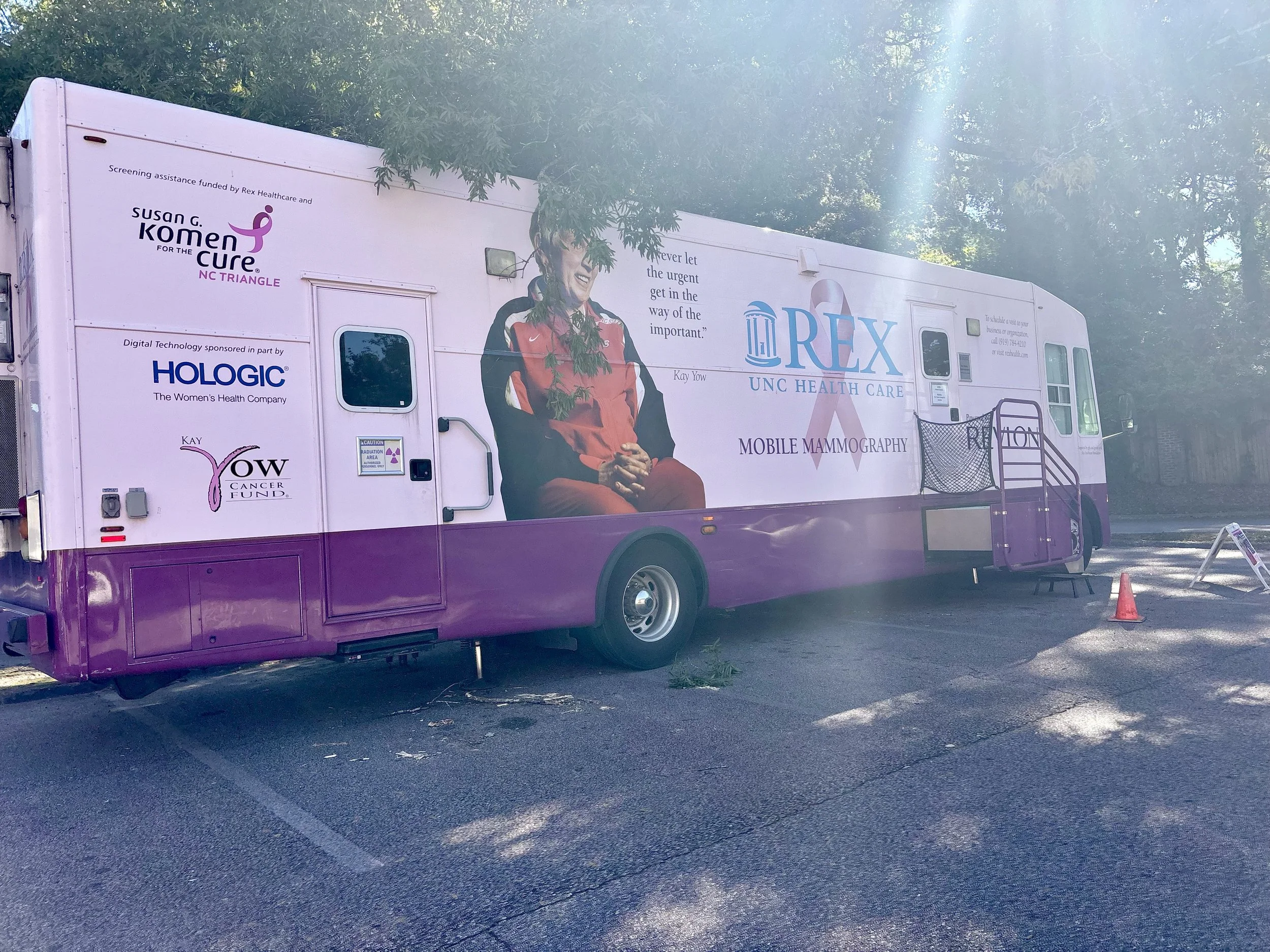
AMM has a partnership with Rex Foundation’s Mobile Mammography Unit, which visits monthly, allowing up to 200 of our patients to get screened every year!
Talk with your provider at your next appointment at AMM to learn about your risks and when you should start getting screened.
– Written by Tara Conti, MSN, RN, FNP
Sources:
American Cancer Society. "Key Statistics for Breast Cancer." https://www.cancer.org/cancer/types/breast-cancer/about/how-common-is-breast-cancer.html
American Cancer Society. "American Cancer Society Recommendations for the Early Detection of Breast Cancer." https://www.cancer.org/cancer/types/breast-cancer/screening-tests-and-early-detection/american-cancer-society-recommendations-for-the-early-detection-of-breast-cancer.html
American Cancer Society. "Breast Cancer Facts & Figures, 2024–2025" (disparities data). https://www.cancer.org/research/acs-research-news/african-american-and-black-people-cancer-statistics-news-2025.html
CDC. "Screening for Breast Cancer." https://www.cdc.gov/breast-cancer/screening/index.html
BreastCancer.org. "Mammogram Screening Guidelines: When to Get a Mammogram." https://www.breastcancer.org/screening-testing/mammograms/recommendations
American College of Physicians. "Screening for Breast Cancer in Asymptomatic, Average-Risk Adult Females: A Guidance Statement" (2026). https://www.acpjournals.org/doi/10.7326/ANNALS-25-05116
American Society of Breast Surgeons. "Position Statement on Screening Mammography and Supplemental Imaging" (2026). https://www.breastsurgeons.org/docs/statements/asbrs-screening-mammography-2026-04-06.pdf