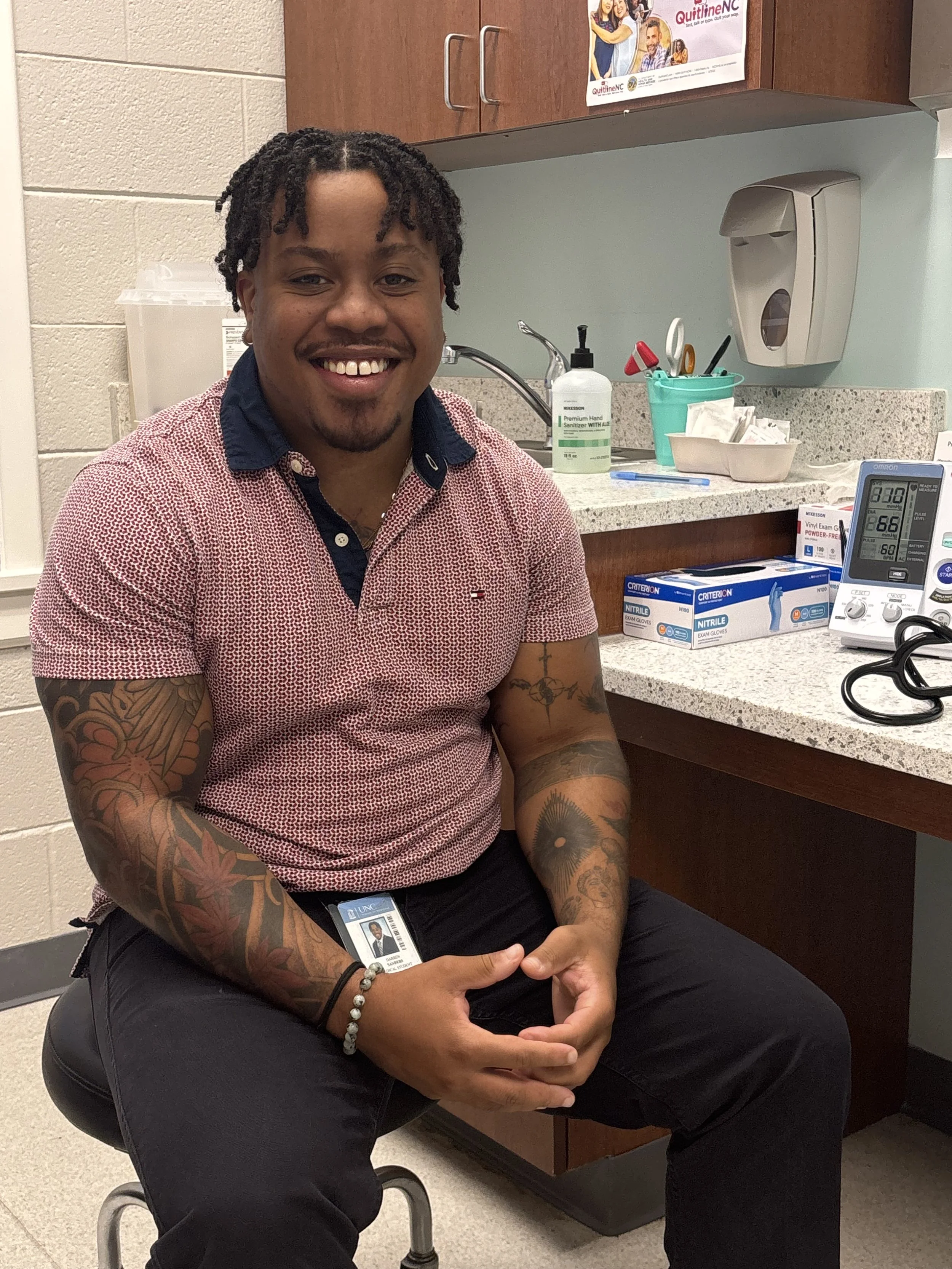
AMM hosted two Kenan Urban Scholars from the UNC School of Medicine this summer. The Kenan Urban Scholars are a group of medical students who provide targeted care for marginalized populations by addressing the specific needs of the community. For six weeks, these students learn more about Raleigh’s most vulnerable populations and how to provide quality medical care to them.

Where are you a student at/what program are you in?
I'm a medical student at the UNC School of Medicine. I'm also a Kenan Urban Scholar, a program that focuses on understanding the social and structural factors that influence health and preparing future physicians to serve underserved communities better. This summer I'm also participating in UNC's Family Medicine Summer Research Program.
Why did you choose to go to med school?
I've always wanted a career where I could make a meaningful difference in people's lives. I'm especially interested in psychiatry because mental health is connected to so many other aspects of health and well-being. I want to work with underserved communities and help address not only medical concerns but also the social and environmental factors that affect people's health.
What are some of the things you are doing at AMM as a medical student?
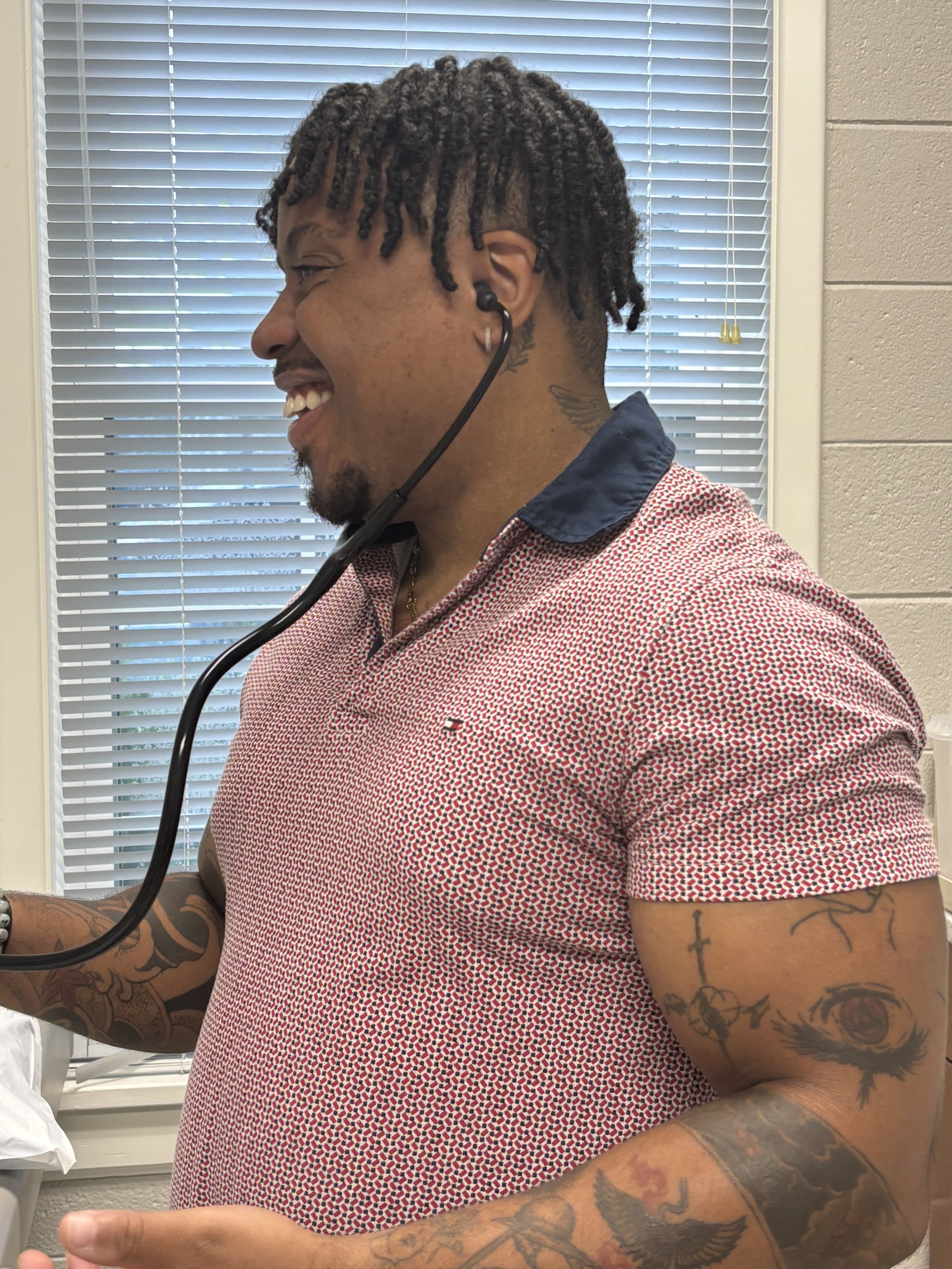
I've been shadowing physicians in clinic, learning how they care for patients with complex medical and social needs. I've also been involved in a research project through my summer program and have had the chance to learn more about the many resources AMM provides, like nutrition programs, exercise classes, and the community garden. It's been really eye-opening to see how much of patient care happens outside of writing prescriptions.
How has it been shadowing a doctor at AMM?
It's been an amazing experience. One thing that's really stood out to me is how much time the physicians spend getting to know their patients and understanding what's going on in their lives. I've seen patients facing challenges like transportation issues, financial stress, and chronic diseases like diabetes, and it's impressive how the team works together to address those barriers instead of only treating the medical problem.
What is the project you are working on at AMM?
I'm working on a research project through the Family Medicine Summer Research Program in partnership with UNC's North Carolina Formerly Incarcerated Transition, or NC FIT, program. Our project focuses on medication adherence among formerly incarcerated individuals. We're looking at factors that may make it harder for people to take their medications consistently after returning to the community, with the goal of identifying ways to better support them and improve their long-term health outcomes. It's been a great opportunity to see how research can directly inform patient care.
What have you learned during your time at AMM?
One of the biggest lessons I've learned is that great healthcare goes far beyond treating diseases. So many of the challenges patients face are connected to things like food access, transportation, finances, housing, and social support. I've also learned how valuable it is to have a team that works together to address those needs. Seeing that approach in action has reinforced how important whole person care really is.
What advice do you have for future medical students coming to AMM?
Come in with an open mind and take advantage of every opportunity to learn. Ask questions, spend time talking with patients, and pay attention to everything that's happening outside of the exam room. Some of the most valuable lessons you'll learn here aren't in a textbook. They're about understanding people's experiences and seeing how healthcare can make a difference when you treat the whole person.
What are your plans for the future?
I plan to pursue psychiatry, ideally working with children and adolescents from underserved communities. I'm especially interested in caring for youth who have experienced trauma or involvement with the justice system. I also hope to stay involved in research and advocacy to improve access to mental healthcare and help reduce the barriers that prevent people from getting the care they need.